

Why Pride Matters Now
Pride Month honors LGBTQIA2S+ history, resistance, care, and the ongoing fight for liberation and safety.
This June commemorates the 57th Pride Month, a time to celebrate the resilience, rebellion, history, and ingenuity of queer people often ostracized by society for living authentically and bravely in their truth.
Pride month is for everyone encompassed by the LGBTQIA2S+ acronym: Lesbian, Gay, Transgender, Queer, Intersex, Asexual, Two-Spirit and the + to represent identities that are unlisted in the acronym, but represented in the community, like gender non-conforming.
For decades, queer and transgender people–particularly people of color – have organized, marched, rallied, and partied in solidarity for queer protections, equitable rights, and autonomy. You may have heard the infamous quote by LGBTQ Activist and drag queen Marsha P. Johnson: “Darling, I want my gay rights now. I think it’s about time the gay brothers and sisters got their rights… especially the women,” acknowledging the dehumanizing mistreatment of queer and trans people, but also reflecting on the disproportionality and misogyny that unfortunately still permeates our society today.
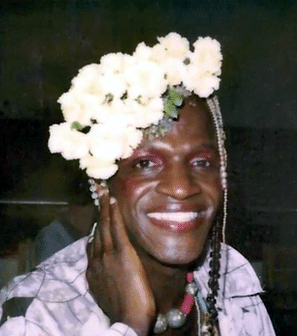
While Marsha P. Johnson is no longer with us, her advocacy and the advocacy of other LGBTQ leaders remain relevant as the current administration emboldens homophobes and transphobes to become increasingly more hostile towards some of the most vulnerable people in our communities.
The First Pride Was a Riot
While the queer liberation movement has evolved, we cannot forget about the origins of our annual celebration, especially in a time where government officials are working with accelerated velocity to erase queer and trans history. We need to know where Pride comes from.
Before the first official Pride march, between 1965 and 1969, on July 4th, Reminder Day gatherings were held by the Eastern Regional Conference of Homophile Organizations in Pennsylvania. These events were some of the earliest known homosexual rights activations in the United States and would become an eminent part of the foundations of the queer liberation movement. Sadly, before the fourth and final Reminder Day celebration took place, New York Police raided the Stonewall Inn.
On June 28th, 1969, in a string of targeted anti-LGBT (the acronym is listed this way to acknowledge its evolution over time; it had not evolved to what we now know as “LGBTQIA2S+”) attacks, police officers in New York raided the Stonewall Inn, a popular bar and haven for LGBT people.
At the time, homosexuality was still illegal; additionally, presenting yourself in a way that could be considered contrary to the sex assigned to you at birth was heavily criminalized. Police took advantage of these homophobic laws to incite violence against gay and gender non-conforming people. In fact, it is said in many retellings that it was police’s attempted arrest of Storme Delarverie–a gender non-conforming, Black, butch lesbian—that triggered the Stonewall Uprising. People were fed up at the alarming rates of police brutality and decided that night to fight back.
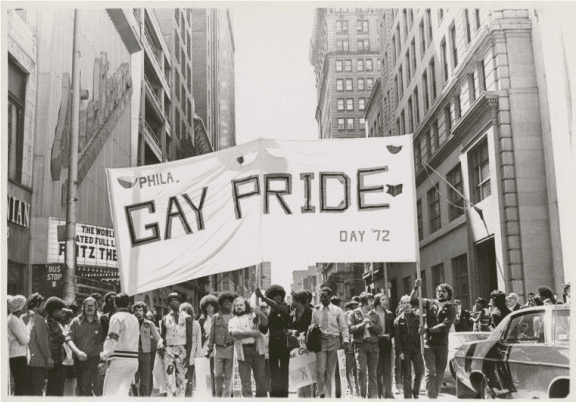
The first official Pride march and parade was held the following year on June 28th, 1970, known as the Christopher Street Liberation Day March. Thousands of people marched for over 51 blocks from Greenwich Village to Central Park in New York, demanding an end to police brutality, the repeal of discriminatory anti-homosexual laws, and an end to employment and housing discrimination. That same year, 1970, activist Craig Schoonmaker coined the moniker “Pride”, stating that “there’s very little chance for people in the world to have power… But anyone can have pride in themselves, and that would make them happier as people, and produce the movement likely to produce change.”
Why Pride Matters Now, Especially Today
Change—that is exactly what we need. Radical change that centers the humanity and dignity of all people, especially people with intersecting marginalized identities. Despite the significant progress we have made over the decades, history is repeating itself through new-age criminalization, anti-LGBTQ+ legislation and sentiment, and hyper-surveillance (sound familiar?).
It is no secret that since the start of 2026, hundreds of anti-LGBTQ+ bills have been introduced into legislation, many of those bills arguing the legitimacy of life-saving health care like gender-affirming care. There have also been pseudoscience reports from the Department of Health and Human Services dismissing the needs of queer and trans people, and you can connect all of this to the hundreds of transgender people who have been murdered between October 2024 and now. LGBTQ+ people are under attack on multiple fronts, and this is why Pride matters, especially today, because like our ancestors and elders, we are still fighting for survival.
Pride is about shifting power back into the hands of those pushed to the margins of society. The people who, in the midst of rejection and adversity, created their own solutions to meet their needs and the needs of the community — think about Marsha P. Johnson and Sylvia Rivera starting the Street Transvestite Action Revolutionaries (STAR) House to provide shelter and resources for Black and brown queer and trans people or the ways that lesbians transformed HIV care through sex education and care webs in the 1980s and 90s.
It is a reminder that LGBTQIA2S+ people exist, always have, and always will, and that what has kept the queer liberation movement going for so long is not solely the progress we have made, but rather the praxis of hope, the prioritization of love, and the act of caring for one another. And that is exactly what we at Physicians for Reproductive Health are calling for everyone to do: hope for a better future, prioritize love, and care for each other shamelessly. Not just during Pride month, but every month.
Whether you are celebrating as a member of the LGBTQIA2S+ (yes, the whole acronym, it’s 2026, y’all) community or supporting a loved one, your praxis must be louder than the homophobia plaguing our society. We are all depending on you to, at the very least, know and never forget our LGBTQIA2S+ history. Happy Pride Month.
Join us next week for a deeper discussion on what our queer liberation movement calls for right now and how you can be a staunch leader in your advocacy.