

Testimony of Dr. Zahedi-Spung on the Economic Implications of Reproductive Health Care Access
CONGRESSIONAL TESTIMONY
Dr. Leilah Zahedi-Spung
Senate Budget Committee
February 28, 2024
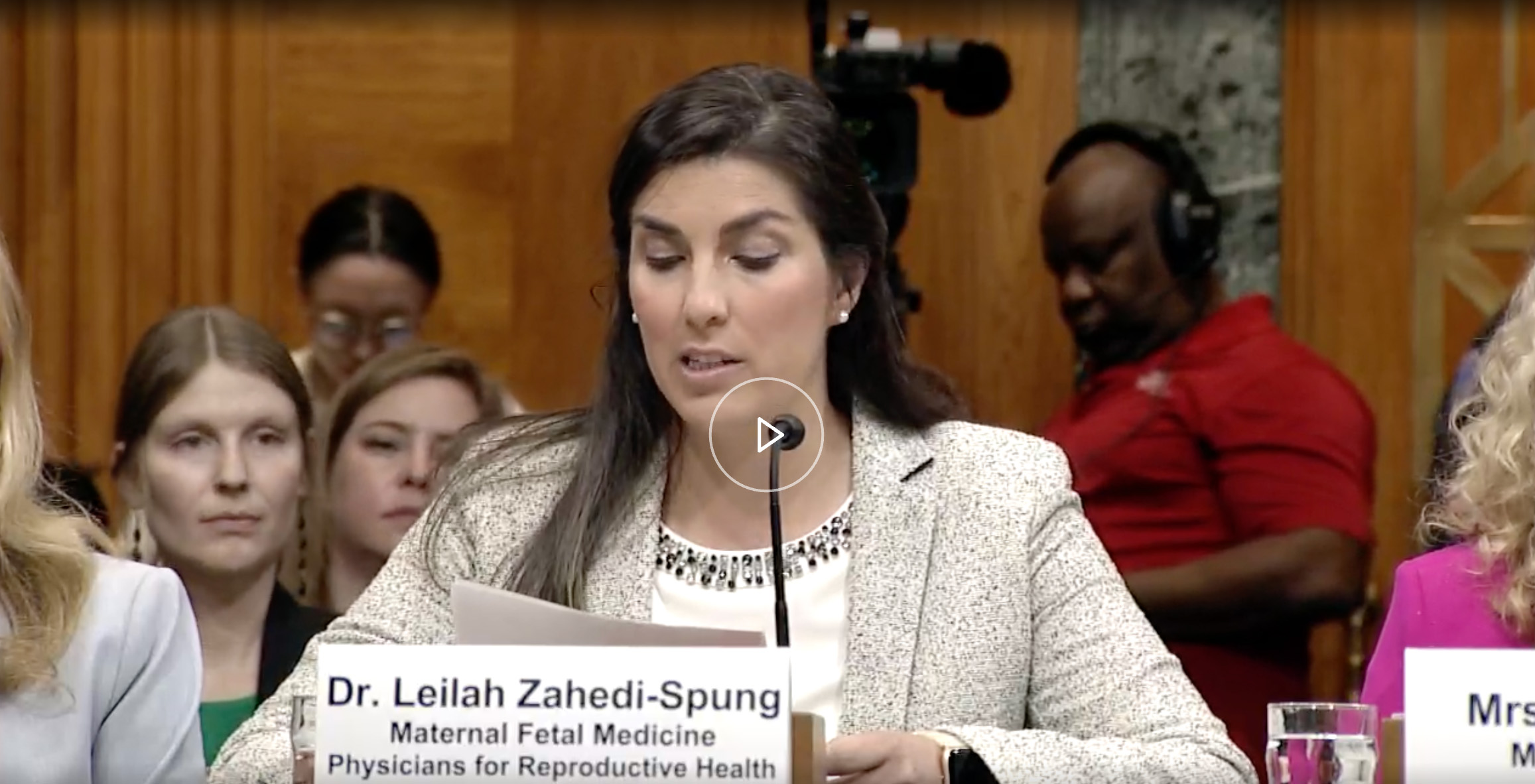
Colorado-based Physicians for Reproductive Health Fellow and Maternal Fetal Medicine specialist Dr. Leilah Zahedi-Spung testified before the Senate Budget Committee on the adverse economic impacts of abortion restrictions.
Drawing on her expertise in complex family planning, Dr. Zahedi-Spung addressed the health and economic consequences of abortion bans and restrictions, including increased risks to maternal health, financial insecurity, barriers to education and employment, and the disproportionate impact on Black, Indigenous, and other people of color. She also spoke about the experiences of patients who must travel out of state to receive abortion care.
Hearing: No Rights to Speak of: The Economic Harms of Restricting Reproductive Freedom
FROM THE TESTIMONY
Dr. Leilah Zahedi-Spung
“I became a doctor because of my commitment to care for people without judgment throughout the course of their lives. For me, that commitment includes caring for people throughout their pregnancies, delivering their babies, and supporting them as they decide to end a pregnancy. Each of them deserves high quality health care regardless of who they are or where they live.
“I want to be clear today that abortion is life-saving, necessary, compassionate, essential health care and should be available throughout pregnancy. Abortion is also extremely safe and none of the arbitrary barriers imposed by politicians make it any safer.
“We know from recent data that already thousands of people have been forced to remain pregnant since the Dobbs decision. This is exceptionally dangerous given the state of maternal mortality and morbidity in this country and especially in states with abortion care bans and restrictions. In addition, the patients who are traveling to myself and my colleagues in Colorado for care, have often received a devastating diagnosis later in pregnancy and are grieving. They have to leave their support systems and communities in order to access care that honors their child in the way they feel is best for them.
“Studies have shown us that people who are denied an abortion are more likely to fall into poverty, increase their amount of debt, and generally have worse financial security for years following their abortion denial. Inability to access abortion also has severe consequences for a person’s career, limiting educational attainment, labor force participation, and the ability to access higher paying jobs, and this is especially true for Black, Indigenous, people of color who face systemic racism in all aspects of their lives. We also know that when someone is able to access abortion care their financial circumstances and the financial circumstances of their future children vastly improve. We also cannot forget how collective economic security benefits all of us and how abortion care restrictions harm our communities as a whole.
“People should be able to get care in their own communities, in a manner that is best for them, with the people they trust. I urge you to listen to the stories being told today by the people who provide and access abortion care. I hope these stories help you understand that abortion care is not an isolated political issue, and to see how profoundly restrictions on abortion access harm all of us and the people we love.”