

Courts Won’t Save Us: Catch Up on SCOTUS Before the New Term
SCOTUS rulings keep eroding rights—from abortion to gender-affirming care. Here’s what’s at stake this term.
We have almost made it through the season, and the weather is finally starting to cool down. If you still feel hot – don’t worry – that is just the fire inside of you reminding you about the injustices of the world.
It has been a hot, humid, and hostile summer. The past few months we watched Medicaid enrollees loose access Planned Parenthood services, immigrant communities lose access to public benefits, and states punish people for making decisions about their own health care. And of course, earlier this summer, we watched the Supreme Court conclude another shameful term.
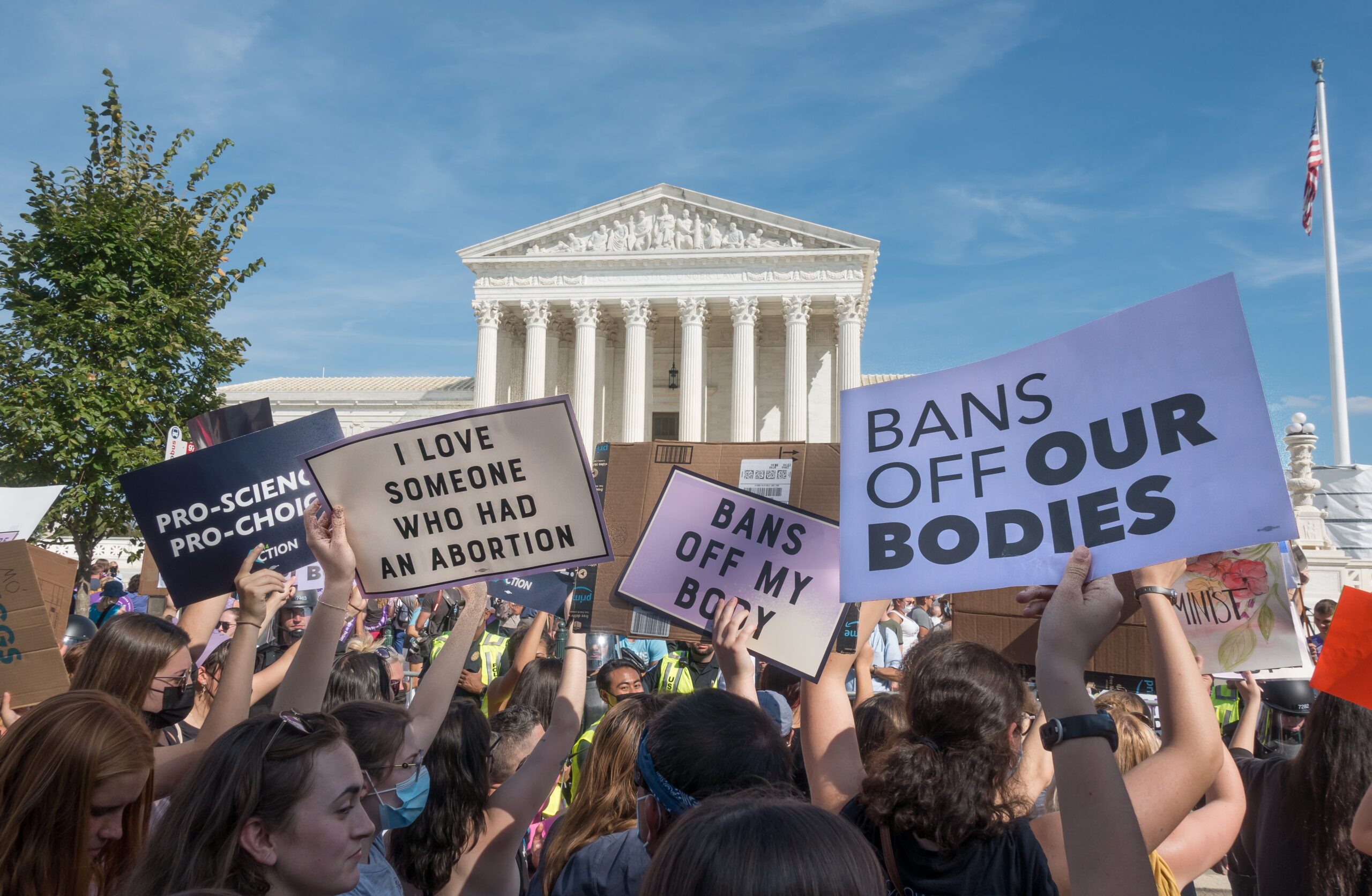
This past term, the Court continued their crusade to undermine fundamental rights and freedoms. The Court’s decisions directly impact sexual and reproductive health, personal well-being, and community safety. These issues directly impact reproductive justice—our right to personal bodily autonomy, the right to have children, not have children, and to parent the children we have in safe and sustainable communities.
Before we head into a SCOTUS new term, we thought we’d recap some of the decisions from this past term that directly impact reproductive justice:
United States v. Skrmetti
In Skrmetti, the Court callously upheld a Tennessee law that bans gender-affirming health care for transgender youth. We know that this decision will harm trans youth and their families in Tennessee and beyond. Twenty-five other states have enacted laws like Tennessee’s ban. The Court just told those states—and the rest of the country—that they can continue banning essential health care for young people. Despite this loss, the Court’s decision did not extend to other cases concerning discrimination based on transgender status.
Medina v. Planned Parenthood South Atlantic
In another devastating loss for Planned Parenthood and Medicaid, the Court held that Medicaid enrollees do not have the right to sue to enforce their right to see the health care provider of their choice. In Medina, the Supreme Court did not rule on the legality of South Carolina excluding Planned Parenthood from the state’s Medicaid program, instead it shut down the legal avenue for challenging exclusion. Now, because Planned Parenthood is effectively excluded from Medicaid in South Carolina, enrollees will face gaps in care as they search for other affordable reproductive health care providers. Like Skrmetti, we know this decision will have impacts far beyond South Carolina. This ruling will embolden other hostile states to take similar measures to prevent Medicaid enrollees from accessing Planned Parenthood health services in their state Medicaid program.
Kennedy v. Braidwood Management Inc.
The questions in Braidwood were whether the structure of the U.S. Preventive Services Task Force is constitutional and whether the Secretary of Health and Human Services has authority to appoint and remove members of the Task Force. By answering, “yes,” to both questions the Court upheld the Affordable Care Act provision requiring coverage of preventative health care services (such as PrEP, contraceptives, and cancer screenings) without cost sharing as constitutional. While continuance of preventative care programs is undeniably a win, we cannot be too comfortable. RFK Jr. is the current Secretary of HHS and the administration he serves now has the power to appoint and remove members of the team that provides recommendations about preventative care for the U.S. RFK Jr. is hostile (and clueless) when it comes to sexual and reproductive care.
Trump v. CASA Inc.
After the Trump administration issued a blatantly unconstitutional executive order to end the right to birthright citizenship, certain individuals, many organizations, states, and advocates sued. Federal judges in three separate district courts issued three separate nationwide injunctions—a form of legal relief that prevents the federal government from enforcing a law. At the Supreme Court, the Court did not decide whether the administration’s executive order was constitutional. Rather, the Court decided that the nationwide injunction was improper. The Court reversed the district courts’ decisions, and in doing so left children and family’s legal status in the air, left to the whim of the state they live in. In this crucial moment when immigrants and their families face significant threats, the Court failed to step in and resolve the blatantly lawless acts of the administration. Since the Court’s decision, the same group of litigants filed a class action lawsuit on behalf of a class of babies who would be subject to the executive order. As of September 2025, the executive order is not in effect while the class action lawsuit is moving through the courts.
WTH IS THIS COURT’S PROBLEM?
In Trump v. CASA Inc., Justice Sonia Sotomayor warned, “No right is safe in the new legal regime the Court creates” However, after years of detrimental decisions from the Court, this “new legal regime” may just be business as usual.
The Court is in the business of serving the special interests of the country’s privileged and harming those with less power. Since the federal judiciary’s inception at the country’s founding, the law was used to distribute and to limit power. Not to sound like a broken record, but you can see the anti-reproductive justice agenda pushed through our government as clear as day. The administration selects judicial nominees with a history of hostility toward reproductive freedom, Congress confirms their position, and then these new judges take their place on the bench. After the judiciary is filled with anti-reproductive health extremists, we are left with indefensible legal precedent that compromises bodily autonomy and causes real harm across the country.
We will never stop using all the paths available to us to fight for reproductive justice, so we know that we must use the law and the courts in that fight. We also know that the courts and Congress are not and never have been our only avenue to justice. Now more than ever communities are relying on each other for support, information, and care. Just because this system is ineffective and damaging does not mean we cannot fight together.
NEW TERM, SAME SHENANIGANS
A new SCOTUS term begins every October. This upcoming term we can expect the Court to continue their crusade of undermining our fundamental rights and freedoms. SCOTUS has already agreed to hear two challenges impacting the LGBTQ+ community – (1) Idaho’s and West Virginia’s ban on transgender athletes’ participation in girls’ and women’s sports and (2) Colorado’s bans on conversion therapy. The Court will also weigh in on voting rights in a continued challenge to Louisiana’s congressional map.
One case on the docket we will be following closely is First Choice Women’s Resource Centers, Inc. v. Platkin. This case involves an anti-abortion center (or so-called crisis pregnancy center) in New Jersey. Remember, anti-abortion centers are facilities that present themselves as resources for people facing unwanted pregnancies, but in reality, exist to dissuade people from accessing abortion care.
Not familiar with the case? Here’s the TLDR: In 2023, New Jersey launched an investigation into the anti-abortion center, First Choice. New Jersey says that the organization’s marketing may have caused some patients to believe they could receive an abortion at the facility. First Choice argues that the state is improperly demanding protected information and infringing on their First Amendment rights.
As with many recent cases, the Court won’t decide whether First Choice must turn over information to the state. Instead, the question before the Court narrowly asks whether First Choice can challenge the state’s investigation directly in federal court. Although this case’s immediate impact is on procedure, it could influence how states investigate and regulate anti-abortion centers.
In recent years, the Court took up some of its most notable cases after summer recess. Including FDA v. AHM and Moyle v. United States in the 2023 – 2024 term. Already this summer there has been a petition to the Court to overturn its decision in Obergefell which granted marriage rights to same-sex couples. And we can’t forget about the emergency docket, also known as the shadow docket.
SAY IT WITH US NOW: “THE COURTS WILL NOT SAVE US.”
The unfortunate reality is that policymakers will continue to try and strip us of our bodily autonomy. The attacks on abortion, gender-affirming care, young people, immigrants, and so many others are intrinsically connected.
At PRH we are proud to work alongside a network of physician advocates fighting each day to advance sexual and reproductive health, rights, and justice. Yes, advocacy includes talking with elected officials, speaking to the media, being public facing about the urgent need to protect our rights. But advocacy also means mutual aid, looking out for and supporting our friends, family and community.
We cannot and should not rely on any court to protect us. No matter how “friendly” we might perceive them to be. So, as we enter another SCOTUS term and prepare for potentially more harmful decisions, PRH will continue to build out a network of fearless physician advocates, publish factual, educational, science-based resources, and continue learning from and supporting movement partners.
Remember, “your liberation is bound up with mine.” This work cannot be done in silos.